Chile is rolling out its new data protection law in December 2026, the 21.719. If you run a website or online store with users in Chile, you already have a deadline. We explain what the regulation requires and how to comply without complications.

It sets the consumer protection rules for ecommerce in Chile. It applies to any online business selling products or services to users in Chile and governs the fundamental rights of digital buyers.

At Lawwwing we automate legal compliance for your online store with solutions built for Chilean regulations. We make sure you comply with every requirement from the very first click.
Complete Privacy Policy
We generate a personalized privacy notice that tells your users how and why you use their data, complying with Law 21.719 from day one.
Consent built for to comply
We set up the consent model required by Chilean regulations: free, informed, specific and revocable, with full traceability to prove it if requested..
Consumer protection
We include the mandatory clauses in your legal texts: right of withdrawal, refund timelines, clear sales conditions and visible contact information.
Legal texts always up to date
When the law changes, we update your documents automatically. You don't need to keep track of every regulatory change.
International compliance
If you also sell in Europe, the United States or Chile, we help you comply with the regulations that apply to your website or global ecommerce.
More trust, less risk
A compliant website builds more trust with your customers and reduces the risk of penalties. Two results for the price of one.
Integrated with Google Consent Mode V2, keeping your legal policies
always up to date with the regulations, effortlessly.
With the Lawwwing plugin you get a cookie banner compatible with Google Consent Mode v2 and keep your legal texts updated under the applicable regulations, all backed by legal experts.


In this section, we answer the most common questions about cookie policy and how to make sure your website complies with current regulations.
The cookie banner must follow an opt-in model, meaning that no non-essential cookies may be activated by default. Users must take a clear and affirmative action to accept cookies. The options to accept, reject, and configure cookies must be presented in an equally visible and accessible manner. Consent must be informed, granular, and reversible.



 Privacy en Chile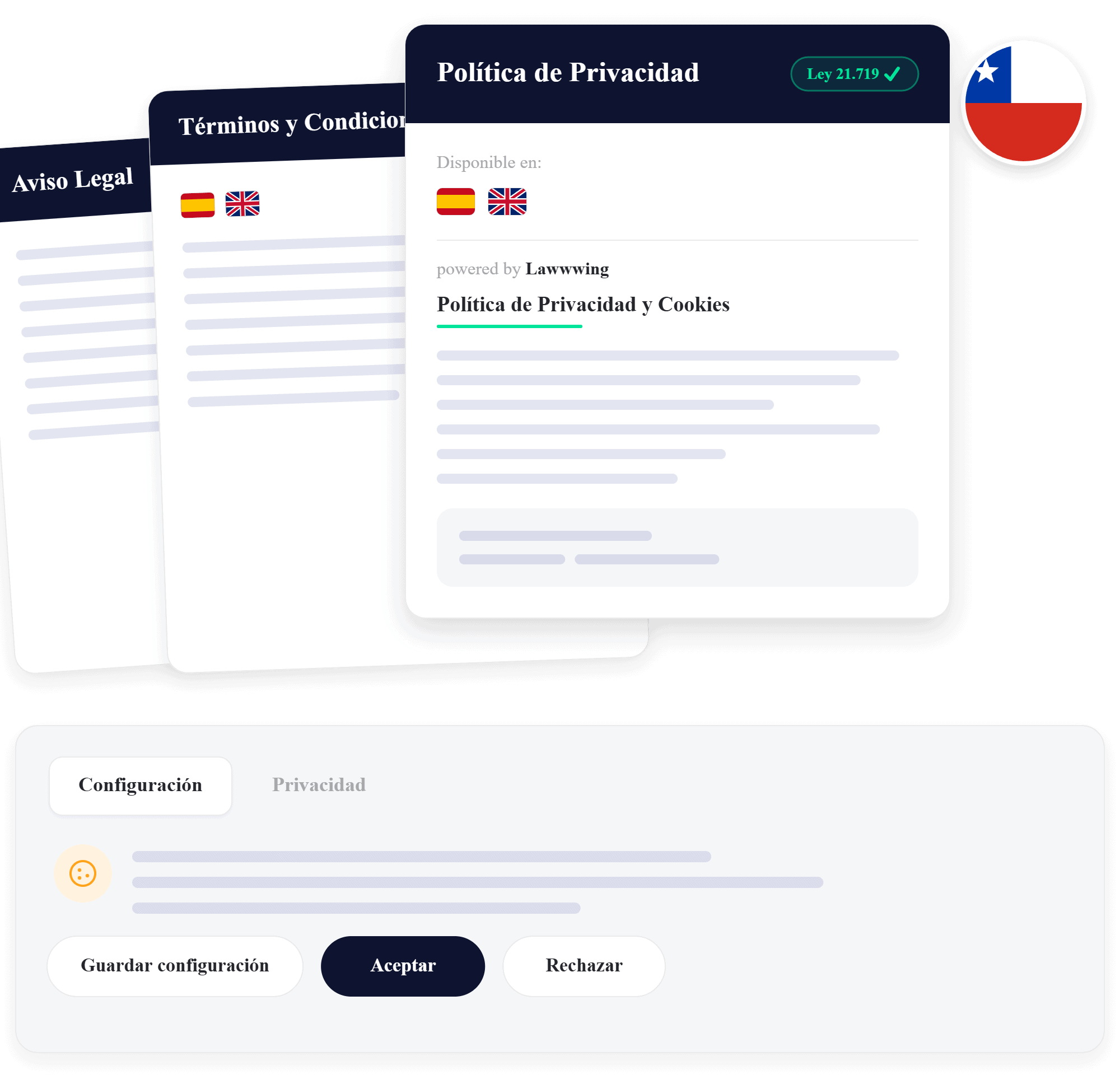

 Start for free with Google